A chemical reaction is a process which ends in the interconversion of chemical subtances. The substance or substances involved are called reactants. These chemical reactions are usually chracterised by a chemical change a usually yield one or more products. Classically, these changes strictly involve the motion of electrons in forming and breaking of chemical bonds. Though the concept of a chemical reaction, in the particular notion of a chemical equasion is applicable to transformations of elementary particles, as well as nuclear reactions.
Different chemical reactions are used with chemical sythesis in order to get a desired product. In biochemistry, series of chemical reactions catalyzed by enzymes form metabolic pathways, by which syntheses and decompositions ordinarily impossible in conditions within a cell are performed.
Tuesday, October 02, 2007

Tuesday, January 16, 2007
Riboflavin Vitamin G
Riboflavin (E101), also known as vitamin B2 or vitamin G, is an easily absorbed micronutrient with a key role in maintaining health in animals. Like the other B vitamins, it supports energy production by aiding in the metabolising of fats, carbohydrates and proteins. Vitamin G is also required for red blood cell formation, respiration, antibody production and for regulating human growth and reproduction. It is essential for healthy skin, nails, hair growth and general good health, including regulating thyroid activity. Riboflavin also helps in the prevention or treatment of many types of eye disorders, including some cases of cataracts. It may assist bloodshot, itching or burning eyes and abnormal sensitivity to light.
Milk, cheese, leafy green vegetables, liver, yeast, almonds and mature soybeans are good sources of vitamin B2, but exposure to light will destroy the riboflavin in these natural sources. Any excess is excreted in the urine, frequently imparting a bright yellow color. As the human body does not store riboflavin it is thought deficiency is common.
In processed foods it is very likely to have been produced synthetically using genetically modified Bacillus subtilis, altered to both increase the bacteria's production of riboflavin and to introduce an antibiotic (ampicillin) resistance marker.
Riboflavin is yellow or orange-yellow in colour and in addition to being used as a food colouring it is also used to fortify some foods. It can be found in baby foods, breakfast cereals, sauces, processed cheese, fruit drinks and vitamin-enriched milk products as well as being widely used in vitamin supplements.
It is difficult to incorporate riboflavin into many liquid products because it has poor solubility in water. Hence the requirement for E101a riboflavin-5'-phosphate, a more expensive but more soluble form of riboflavin.
Milk, cheese, leafy green vegetables, liver, yeast, almonds and mature soybeans are good sources of vitamin B2, but exposure to light will destroy the riboflavin in these natural sources. Any excess is excreted in the urine, frequently imparting a bright yellow color. As the human body does not store riboflavin it is thought deficiency is common.
In processed foods it is very likely to have been produced synthetically using genetically modified Bacillus subtilis, altered to both increase the bacteria's production of riboflavin and to introduce an antibiotic (ampicillin) resistance marker.
Riboflavin is yellow or orange-yellow in colour and in addition to being used as a food colouring it is also used to fortify some foods. It can be found in baby foods, breakfast cereals, sauces, processed cheese, fruit drinks and vitamin-enriched milk products as well as being widely used in vitamin supplements.
It is difficult to incorporate riboflavin into many liquid products because it has poor solubility in water. Hence the requirement for E101a riboflavin-5'-phosphate, a more expensive but more soluble form of riboflavin.
Monday, September 11, 2006
Coenzyme Q10 Energy Catalyst
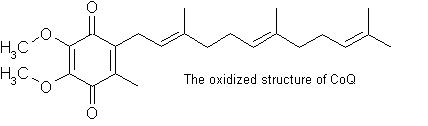
Coenzyme Q10 acts as a catalyst for energy production, which increases metabolism level at a cellular level. It is known to support heart health and overall cellular vigor. CoQ10 levels diminish with age and supplementation can help restore energy, vitality. Coenzyme Q10 (also called CoQ10 or ubiquinone) is also involved in maintaining normal heart function, and it is an antioxidant, scavenging free radicals throughout the body.
CoQ10 is required by every cell in our body and is the key to chemical reactions that produce cellular energy. Just as an automobile engine with poor spark plugs chokes, sputters and dies, without enough CoQ10 (our cellular spark plug) our health can break down, resulting in all kinds of degenerative diseases. Studies show that CoQ10 may be effective for congestive heart failure, high blood pressure, some forms of cancer, and gum disease.
Thursday, March 02, 2006
Vitamin C Ascorbic Acid

Vitamin C is a water-soluble nutrient essential for life, used by the human body for many purposes. To the best of scientific knowledge, all animals and plants synthesize their own vitamin C, except for a small number of animals, including guinea pigs, humans, apes, the red-vented bulbul, a fruit-eating bat and a species of trout, that are not able to. This, along with the related fact that man possesses three of the four enzymes that animals employ to manufacture the substance in relatively large amounts, has led researchers such as Irwin Stone and Linus Pauling to hypothesize that man once manufactured this substance in the body millions of years ago in quantities roughly estimated at 3-4,000 mg daily, but later lost the ability to do this through evolution. If true, this would of course mean that vitamin C was misnamed as a vitamin and is in fact a vital macronutrient like fat or carbohydrate.
Vitamin C was first isolated in 1928, and in 1932 it was proved to be the agent which prevents scurvy. Albert Szent-Györgyi was awarded the Nobel Prize for this feat.
Vitamin C is a weak acid, called ascorbic acid or ascorbate (an L-enantiomer of ascorbic acid; an l-enantiomer is simply one of two mirror image forms of the same chemical molecular structure, see optical isomers). The active part of the substance is the ascorbate ion, which can express itself as either an acid or a salt of ascorbate that is neutral or slightly basic. Commercial vitamin C is often a mix of ascorbic acid, sodium ascorbate and/or other ascorbates.
Saturday, September 03, 2005
Vitamin E as Antioxidant
Vitamin E is also known as Tocopherol. Alpha-tocopherol is traditionally recognized as the most active form of vitamin E in humans, and is a powerful antioxidant. The measurement of "vitamin E" activity in international units (IU) was based on fertility enhancement by the prevention of spontaneous abortions in pregnant rats relative to alpha tocopherol. It increases naturally to about 150% of normal in the maternal circulation during human pregnancies. The other isomers are slowly being recognized as research begins to elucidate their additional roles in the human body. Many naturopathic and orthomolecular medicine advocates suggest that vitamin E supplements contain at least 20% by weight of the other natural vitamin E isomers. Commercially available blends of natural vitamin E include "mixed tocopherols" and "high gamma tocopherol" formulas. Also selenium, Coenzyme Q10, and ample vitamin C have been shown to be essential cofactors of natural tocopherols.
Antioxidants such as vitamin E act to protect cells against the effects of free radicals, which are potentially damaging by-products of the body's metabolism. Free radicals can cause cell damage that may contribute to the development of cardiovascular disease and cancer. Vitamin C and other anti-oxidants recycle vitamin E end-products back into effective suppressors of free radicals. Studies are underway to determine whether vitamin E might help prevent or delay the development of those chronic diseases.
Vegetable oils, nuts, wheat germ and green leafy vegetables are the main dietary sources of vitamin E. Fortified breakfast cereals are also an important source of vitamin E in the United States. Although originally extracted from wheat germ oil, most natural vitamin E supplements are now derived from vegetable oils, usually soybean oil.
Commercial vitamin E supplements can be classified into several distinct categories: fully synthetic vitamin E, "d,l-alpha-tocopherol", the most inexpensive, most commonly sold supplement form usually as the acetate ester; semisynthetic "natural source" vitamin E esters, the "natural source" forms used in tablets and multiple vitamins; highly fractionated natural d-alpha tocopherol; less fractionated "natural mixed tocopherols"; high gamma-tocopherol fraction supplements; and tocotrienol supplements.
Synthetic vitamin E, usually marked as d,l-tocopherol or d,l tocopheryl acetate, with 50% d-alpha tocopherol moiety and 50% l-alpha-tocopherol moiety, as synthesized by an earlier process is now actually manufactured as all-racemic alpha tocopherol, with only about one alpha tocopherol molecule in 8 molecules as actual d-alpha tocpherol. The synthetic form is not as active as the natural alpha tocopherol form. The 1950's thalidomide disaster with numerous severe birth defects is a common example of d- vs l- epimer forms type problem with synthesized racemic mixtures. Information on any side effects of the synthetic vitamin E epimers is not readily available. Naturopathic and orthomolecular medicine advocates have long considered the synthetic vitamin E forms to be with little or no merit for cancer, circulatory and heart diseases.
Semisynthetic "natural source" vitamin E, manufacturers convert the common natural beta, gamma and delta tocopherol isomers into esters using acetic or succinic acid and add methyl groups to yield d-alpha tocopheryl esters such as d-alpha tocopheryl acetate or d-alpha tocopheryl succinate. These tocopheryl esters are more stable and are easy to use in tablets and multiple vitamin pills. Because only alpha tocopherols were officially counted as "vitamin E" in supplements, refiners and manufacturers faced enormous economic pressure to esterify and methylate the other natural tocopherol isomers, d-beta-, d-gamma- and d-delta-tocopherol into d-alpha tocopheryl acetate or succinate. In the healthy human body, the semisynthetic forms are easily de-esterified over several days, primarily in the liver, but not for common problems in aged or ill patients.
Antioxidants such as vitamin E act to protect cells against the effects of free radicals, which are potentially damaging by-products of the body's metabolism. Free radicals can cause cell damage that may contribute to the development of cardiovascular disease and cancer. Vitamin C and other anti-oxidants recycle vitamin E end-products back into effective suppressors of free radicals. Studies are underway to determine whether vitamin E might help prevent or delay the development of those chronic diseases.
Vegetable oils, nuts, wheat germ and green leafy vegetables are the main dietary sources of vitamin E. Fortified breakfast cereals are also an important source of vitamin E in the United States. Although originally extracted from wheat germ oil, most natural vitamin E supplements are now derived from vegetable oils, usually soybean oil.
Commercial vitamin E supplements can be classified into several distinct categories: fully synthetic vitamin E, "d,l-alpha-tocopherol", the most inexpensive, most commonly sold supplement form usually as the acetate ester; semisynthetic "natural source" vitamin E esters, the "natural source" forms used in tablets and multiple vitamins; highly fractionated natural d-alpha tocopherol; less fractionated "natural mixed tocopherols"; high gamma-tocopherol fraction supplements; and tocotrienol supplements.
Synthetic vitamin E, usually marked as d,l-tocopherol or d,l tocopheryl acetate, with 50% d-alpha tocopherol moiety and 50% l-alpha-tocopherol moiety, as synthesized by an earlier process is now actually manufactured as all-racemic alpha tocopherol, with only about one alpha tocopherol molecule in 8 molecules as actual d-alpha tocpherol. The synthetic form is not as active as the natural alpha tocopherol form. The 1950's thalidomide disaster with numerous severe birth defects is a common example of d- vs l- epimer forms type problem with synthesized racemic mixtures. Information on any side effects of the synthetic vitamin E epimers is not readily available. Naturopathic and orthomolecular medicine advocates have long considered the synthetic vitamin E forms to be with little or no merit for cancer, circulatory and heart diseases.
Semisynthetic "natural source" vitamin E, manufacturers convert the common natural beta, gamma and delta tocopherol isomers into esters using acetic or succinic acid and add methyl groups to yield d-alpha tocopheryl esters such as d-alpha tocopheryl acetate or d-alpha tocopheryl succinate. These tocopheryl esters are more stable and are easy to use in tablets and multiple vitamin pills. Because only alpha tocopherols were officially counted as "vitamin E" in supplements, refiners and manufacturers faced enormous economic pressure to esterify and methylate the other natural tocopherol isomers, d-beta-, d-gamma- and d-delta-tocopherol into d-alpha tocopheryl acetate or succinate. In the healthy human body, the semisynthetic forms are easily de-esterified over several days, primarily in the liver, but not for common problems in aged or ill patients.
Friday, July 29, 2005
Vitamin A
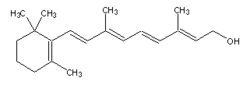
Vitamin A is also known as Retinol.
Retinol, vitamin A, is a fat-soluble, antioxidant vitamin important in vision and bone growth. It belongs to the family of chemical compounds known as retinoids. Retinol is ingested in a precursor form; animal sources (milk and eggs) contain retinyl esters, whereas plants (carrots, spinach) contain carotenoids. Tissue cells convert these precursors to retinol, and then to either retinal or retinoic acid.
Sunday, June 19, 2005
What is Salt?
In chemistry, a salt is a chemical compound composed of cations (positively charged ions) bound to anions (negatively charged ions). They are typically the product of a chemical reaction between a base and an acid, the base contributing the cation and the acid contributing the anion.
One example is table salt, in common usage often simply called salt. It is the specific salt sodium chloride, and is described thoroughly in that article. Its formula is NaCl and it is the product of the base sodium hydroxide, NaOH and hydrochloric acid, HCl. Table salt is the same as sea salt.
In general, salts are ionic compounds which form crystals. They are usually soluble in water, where the two ions separate. Salts typically have a high melting point, low hardness, and low compressibility. If molten or dissolved in water, they conduct electricity.
One example is table salt, in common usage often simply called salt. It is the specific salt sodium chloride, and is described thoroughly in that article. Its formula is NaCl and it is the product of the base sodium hydroxide, NaOH and hydrochloric acid, HCl. Table salt is the same as sea salt.
In general, salts are ionic compounds which form crystals. They are usually soluble in water, where the two ions separate. Salts typically have a high melting point, low hardness, and low compressibility. If molten or dissolved in water, they conduct electricity.
Thursday, May 19, 2005
Amino Acids
Amino acids are biochemical building blocks. They form short polymer chains called peptides or polypeptides which in turn form structures called proteins.
All twenty amino acids are encoded by the standard genetic code and are called proteinogenic or standard amino acids. Rarer, more complicated ones are produced by the body and are called nonstandard. Proline is the only proteinogenic amino acid whose side group is cyclic and links to the a-amino group, forming a secondary amino group. Formerly, proline was misleadingly called an imino acid. Other amino acids contained in proteins are usually formed by post-translational modification, that is modification after translation (protein synthesis). These modifications are often essential for the function of the protein. At least two amino acids other than the standard 20 are sometimes incorporated into proteins during translation:
Selenocysteine is incorporated into some proteins at a UGA codon, which is normally a stop codon.
Pyrrolysine is used by some methanogens in enzymes that they use to produce methane. It is coded for similarity to selenocysteine but with the codon UAG instead.
Although only 20 amino acids are genetically coded, over 100 have been found in nature. Some of these have been detected in meteorites, especially in a type known as carbonaceous chondrites. Microorganisms and plants often produce very uncommon amino acids, which can be found in peptidic antibiotics (e.g. nisin or alamethicin). Lanthionine is a sulfide-bridged alanine dimer which is found together with unsaturated amino acids in lantibiotics (antibiotic peptides of microbial origin). 1-Aminocyclopropane-1-carboxylic acid (ACC) is a small disubstituted cyclic amino acid and a key intermediate in the production of the plant hormone ethylene.
In addition to amino acids for protein synthesis, there are other biologically important amino acids, such as the neurotransmitters glycine, GABA and glutamate, as well as carnitine (used in lipid transport within a cell), ornithine, citrulline, homocysteine, hydroxyproline, hydroxylysine, and sarcosine.
Some of the 20 standard amino acids are called essential amino acids, because they cannot be synthesized by the body from other compounds through chemical reactions, but instead must be taken in with food. In humans, the essential amino acids are lysine, leucine, isoleucine, methionine, phenylalanine, threonine, tryptophan, valine, and (in children) histidine and arginine.
All twenty amino acids are encoded by the standard genetic code and are called proteinogenic or standard amino acids. Rarer, more complicated ones are produced by the body and are called nonstandard. Proline is the only proteinogenic amino acid whose side group is cyclic and links to the a-amino group, forming a secondary amino group. Formerly, proline was misleadingly called an imino acid. Other amino acids contained in proteins are usually formed by post-translational modification, that is modification after translation (protein synthesis). These modifications are often essential for the function of the protein. At least two amino acids other than the standard 20 are sometimes incorporated into proteins during translation:
Selenocysteine is incorporated into some proteins at a UGA codon, which is normally a stop codon.
Pyrrolysine is used by some methanogens in enzymes that they use to produce methane. It is coded for similarity to selenocysteine but with the codon UAG instead.
Although only 20 amino acids are genetically coded, over 100 have been found in nature. Some of these have been detected in meteorites, especially in a type known as carbonaceous chondrites. Microorganisms and plants often produce very uncommon amino acids, which can be found in peptidic antibiotics (e.g. nisin or alamethicin). Lanthionine is a sulfide-bridged alanine dimer which is found together with unsaturated amino acids in lantibiotics (antibiotic peptides of microbial origin). 1-Aminocyclopropane-1-carboxylic acid (ACC) is a small disubstituted cyclic amino acid and a key intermediate in the production of the plant hormone ethylene.
In addition to amino acids for protein synthesis, there are other biologically important amino acids, such as the neurotransmitters glycine, GABA and glutamate, as well as carnitine (used in lipid transport within a cell), ornithine, citrulline, homocysteine, hydroxyproline, hydroxylysine, and sarcosine.
Some of the 20 standard amino acids are called essential amino acids, because they cannot be synthesized by the body from other compounds through chemical reactions, but instead must be taken in with food. In humans, the essential amino acids are lysine, leucine, isoleucine, methionine, phenylalanine, threonine, tryptophan, valine, and (in children) histidine and arginine.
Saturday, April 16, 2005
Chemistry
Chemistry (derived from alchemy) is the science of matter at or near the atomic scale. Such matter includes atoms and the collections of atoms (such as molecules, crystals, and metals) that constitute materials encountered in everyday life. Chemistry deals with the composition and properties of such structures, as well as their transformations and interactions. According to modern chemistry, the physical properties of materials are generally predictable from their structure at the atomic scale. Chemistry is, along with physics, one of the most fundamental natural sciences.
Subscribe to:
Posts (Atom)